
Rediscovering Japan
Rediscovering Japan
Travel (Ichijodani/Echizen Ono/Katsuyama (Fukui) Part 4 (Echizen Ono)
by tomizuta
back to Ichijodani/Echizen Ono/Katsuyama (Fukui) Part 1
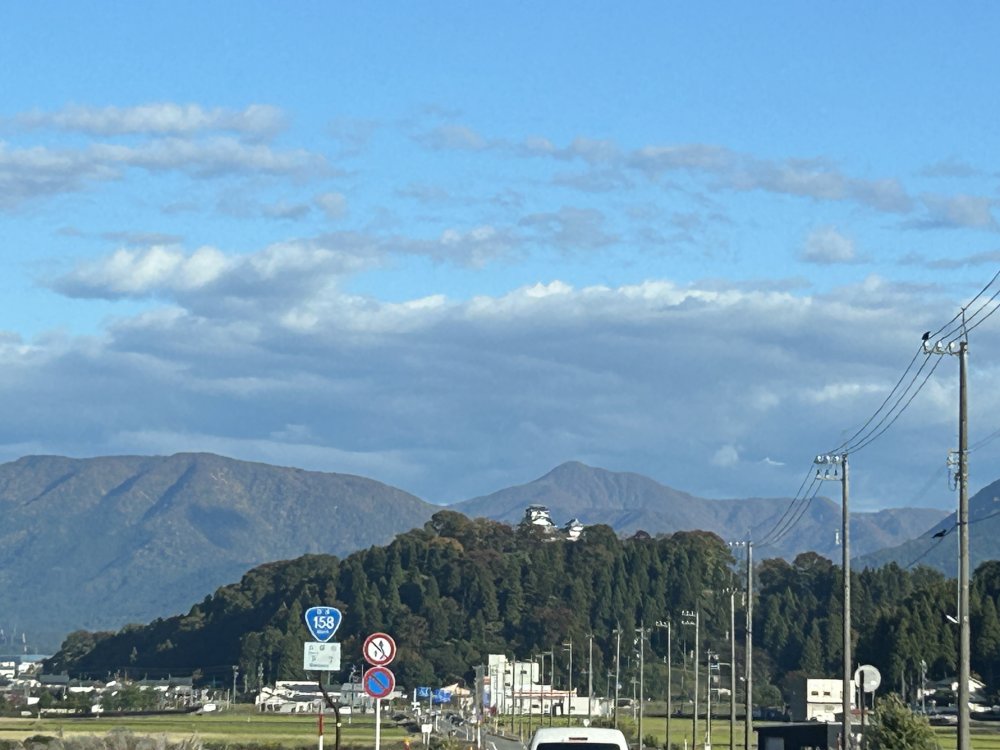
Echizen Ono Castle is the symbol of Echizen Ono City. The castle can be seen in the middle atop the mountain as you approach the city from the west.
For the second night of our trip in Fukui, we stayed at an inn located just south of Echizen Ono Castle. After checking in, we left our luggage at the inn, parked the car, and set out to explore the town. Although the castle is called Echizen Ono Castle and the JR station Echizen Ono Station—to distinguish them from other castles and stations named Ono—the municipality’s official name is simply Ono City. The term Echizen, on the other hand, has been firmly established since around the eighth century as a name referring to the whole area of present-day Fukui Prefecture. Until the rise of the samurai governments of the Kamakura and Muromachi periods, Echizen was administered by court-appointed provincial governors known as kokushi. (Murasaki Shikibu’s father served in Echizen for a time.) From the Kamakura period onward, provincial governance was taken over by shugo, military governors appointed by the shogunate; and during the Muromachi period, these shugo became shugo daimyo—daimyo with authority over the local warrior class. In Echizen, the Shiba clan held this position. Alongside the Shiba, however, another major force rose to prominence in Echizen, as well as in nearby Etchu and Kaga: the Ikko sect. This group, rooted in Jodo Shinshu Buddhism, consisted of monks, warriors, farmers, and townspeople who collectively formed an autonomous religious community. Based on the belief that anyone—regardless of status—could attain rebirth in the Pure Land simply by chanting Namu Amida Butsu, the Ikko sect expanded rapidly amid the turmoil of the Onin War (1467–1477), itself sparked by conflicts between shugo daimyo. As these communities grew in strength, they clashed repeatedly with shugo daimyo and emerging sengoku warlords in the uprisings known as the Ikko ikki throughout the Kinki, Hokuriku, and Tokai regions. (Ikki refers to a mass uprising against established authority.) In the Ono region as well, the Ikko sect wielded strong influence, and from the late fifteenth century the Asakura clan found itself caught between two opponents: the Shiba shugo daimyo on one side and the Ikko sect on the other. Nobunaga Oda—who sought to unify Japan—fought a long and ferocious struggle against the Honganji temple at Ishiyama (the site of today’s Osaka Castle) and the Ikko sect that the Honganji led. Because the Ikko sect held considerable power in Ono, Nobunaga dispatched one of his trusted generals, Nagachika Kanamori, to the region. Nagachika succeeded in suppressing the Ikko ikki, received Ono as his domain, and in 1580 built the castle that is today known as Echizen Ono Castle.
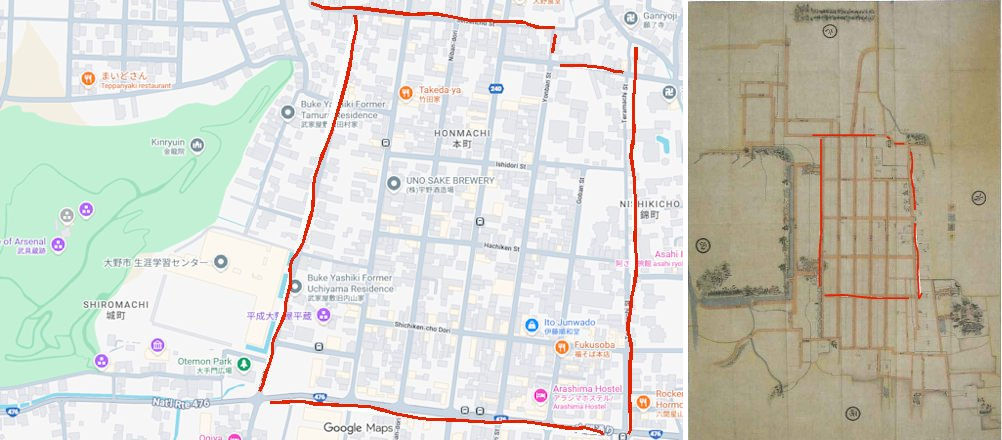
The map on the left is a current Google Map of central Ono City, with the former castle town outlined in red (The castle is in the middle of the green area). The map on the right is a late-Edo-period (1858) illustration from the Ono City History and Folklore Museum (currently Ono City History Museum). Because the original illustration places north to the left, it has been rotated 90 degrees to the right so that north is at the top, as in the Google Map. As the comparison shows, the town layout has remained largely unchanged since the Edo period.
The area around the Otemon Gate—the main entrance to the castle in former times—is now an open plaza that serves as a playground for children (shown as Otemon Park in the left bottom of the Google Map). At the far end of the plaza stands a torii gate marking the entrance to the castle grounds, so we passed through it. A short distance ahead, on the left, is the Ono City Folk Museum. The building originally housed the Ono Courthouse, constructed in 1889. When the courthouse was decommissioned in 1968, the building was relocated to its present site and converted into a museum. In addition to the building itself, the museum displays materials illustrating daily life in Ono City during the 1950s and 1960s. Visitors should take care to note that many facilities close early. This museum also closes at 16:00, and as we arrived too late to enter, we continued on. A little farther along we found a small shrine: Yanagino Shrine (Yanagi-no-Yashiro), which enshrines Toshitada Doi, the seventh domain lord, remembered as an exemplary ruler.
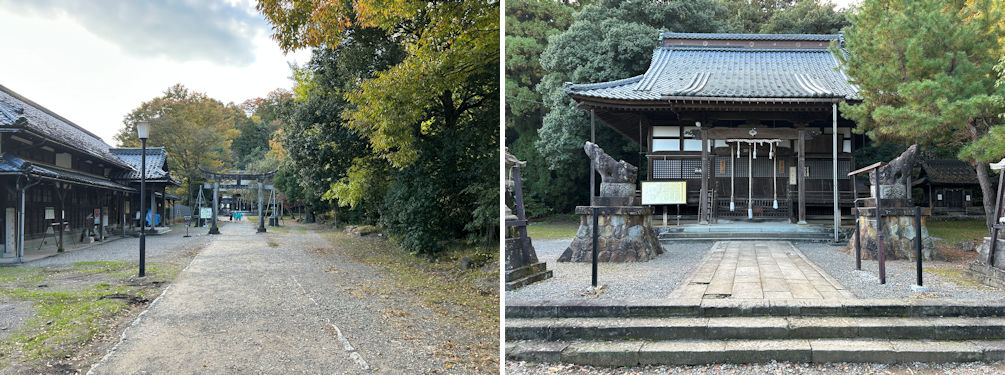
The Ono City Folk Museum is on the left side as you approach the Yanagi-no-yashiro and Echizen Ono Castle ahead (left). Yanagi-no-yashiro enshrines Toshitada Doi, remembered as an exemplary ruler (right).
Echizen Ono Castle was completed in 1580 by order of Nagachika Kanamori atop a 249-meter hill. The castle was dismantled in 1873 following the Meiji Restoration. The current castle (keep) was reconstructed in 1968. The reconstructed castle is famous for appearing as a “castle in the sky,” rising above a sea of clouds in the early morning hours. Unfortunately, we were not able to capture that moment during this visit. The castle’s official English website provides a wealth of detailed information, so I encourage anyone interested to take a look. At the same time that Nagachika Kanamori built the castle, he laid out a narrow, rectangular grid of streets, creating a castle town whose original layout remains largely intact today. Because of this well-preserved townscape, Ono City is often referred to as the “Little Kyoto of Echizen.” Nagachika was transferred to the Hida domain after only about five years, where he constructed Takayama Castle and the surrounding castle town, a similar traditional townscape survives in Takayama as well (for more on the castle town of Takayama, please click here).
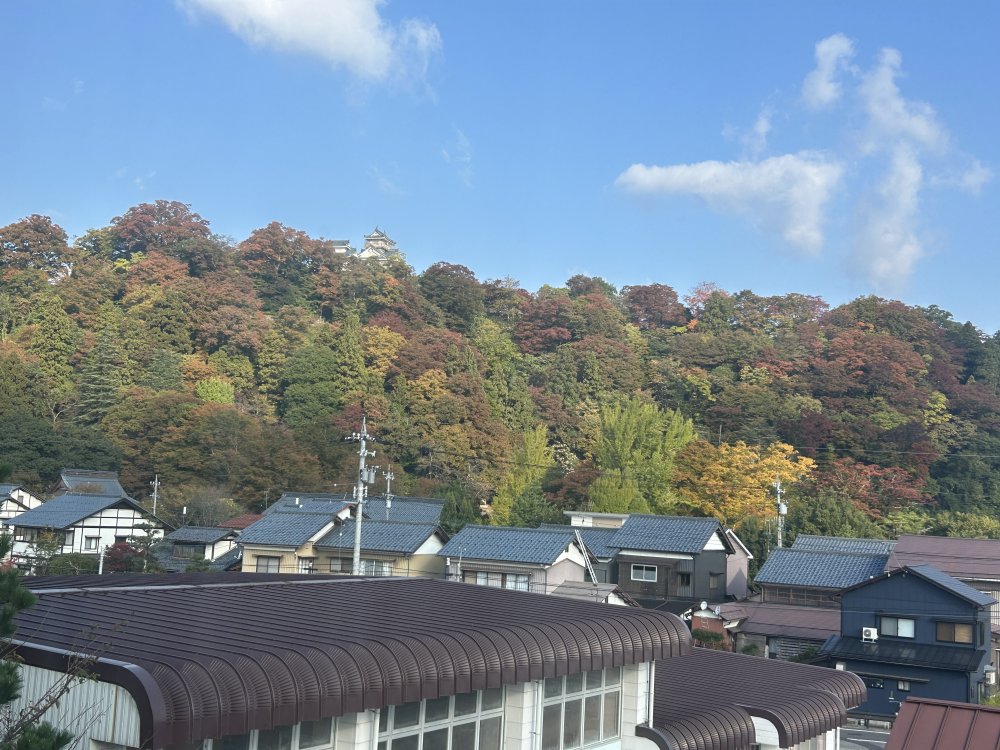
Unfortunately we were not able to capture Echizen Ono Castle as a castle in the sky. I took this photo from the inn I stayed early in the morning, but unfortunately there was no mist or cloud that day.
We began exploring the town from the lower-left area of the map. Our first stop was a facility located just east of Otemon Square, across the road. This large gift shop has an ample parking lot, and in one corner stands a time bell. The original bell, which dated back to the Meiji period, was destroyed in a fire in the late Meiji years; the one standing today is a reconstruction. What particularly caught my interest was the former residence of the retired domain lord, situated along the national highway side of the facility. This building served as the home where Toshitada Doi lived after his retirement in 1862. Although it is now open to the public as a free rest area, it had once been used as the office of Yanagino Shrine before being dismantled and relocated to its current site. True to Toshitada Doi’s reputation for frugality, the residence is modest in scale, yet it includes a small garden and offers a pleasantly relaxing atmosphere.
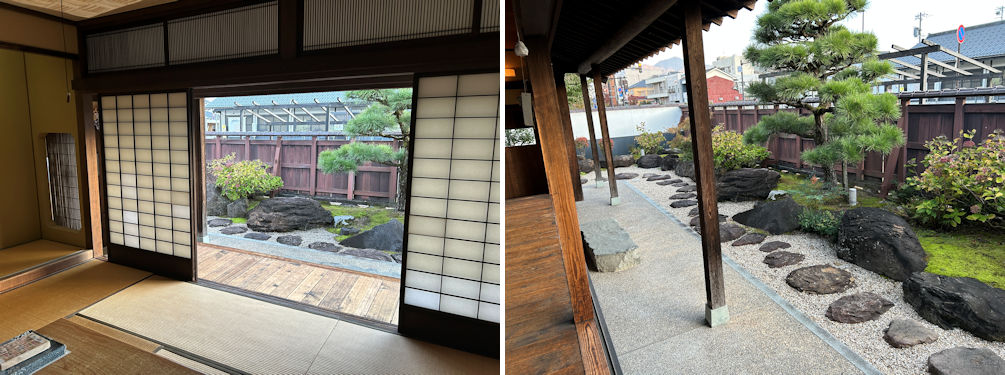
This building served as the home where Toshitada Doi lived after his retirement in 1862. True to Toshitada Doi’s reputation for frugality, the residence is modest in scale, yet it includes a small garden and offers a pleasantly relaxing atmosphere.
After taking a short break there, we continued east along the national highway and turned left onto the next street—Ichiban-dori (equivalent to 1st. Avenue). Just as we made the turn, we passed a young girl on a bicycle who cheerfully greeted us with a bright “Konnichiwa.” The children playing earlier in Otemon Square had been the same way; one of my fond memories from this trip is how cheerful—and polite to visitors—the children of Ono are. The shops along the street may have changed over the years, but the road itself, stretching straight northward, surely retains the same layout it has had since olden times.
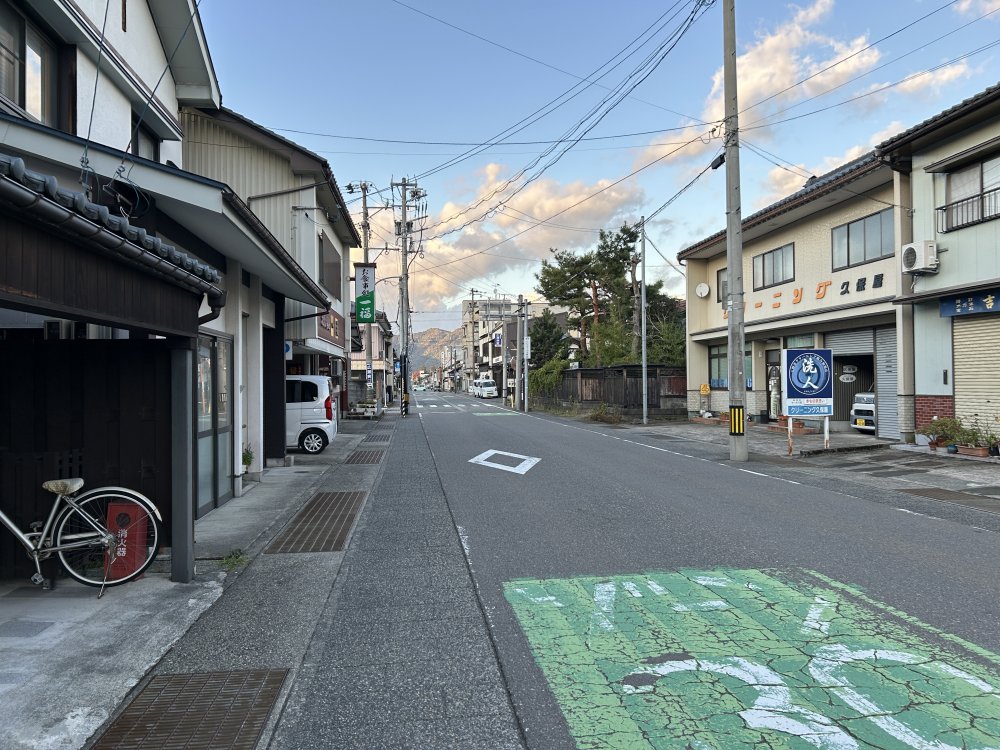
The shops along the Ichiban-dori (equivalent to 1st. Avenue) may have changed over the years, but the road itself, stretching straight northward, surely retains the same layout it has had since olden times.
Continuing along Ichiban-dori, we came upon a sake brewery on the right. I immediately stepped inside to buy some sake—which I will introduce later. I understand there are still four active breweries in Echizen Ono today. Considering that Ono’s population is now around thirty thousand—roughly one four-thousandth of Japan’s 120 million—and comparing this with the roughly 1,600 sake breweries nationwide, the density is remarkable: while the population is about one-four-thousandth of the national total, the number of breweries is one-four-hundredth. One key reason is the city’s abundant high-quality spring water, with more than ten natural springs found throughout Ono.
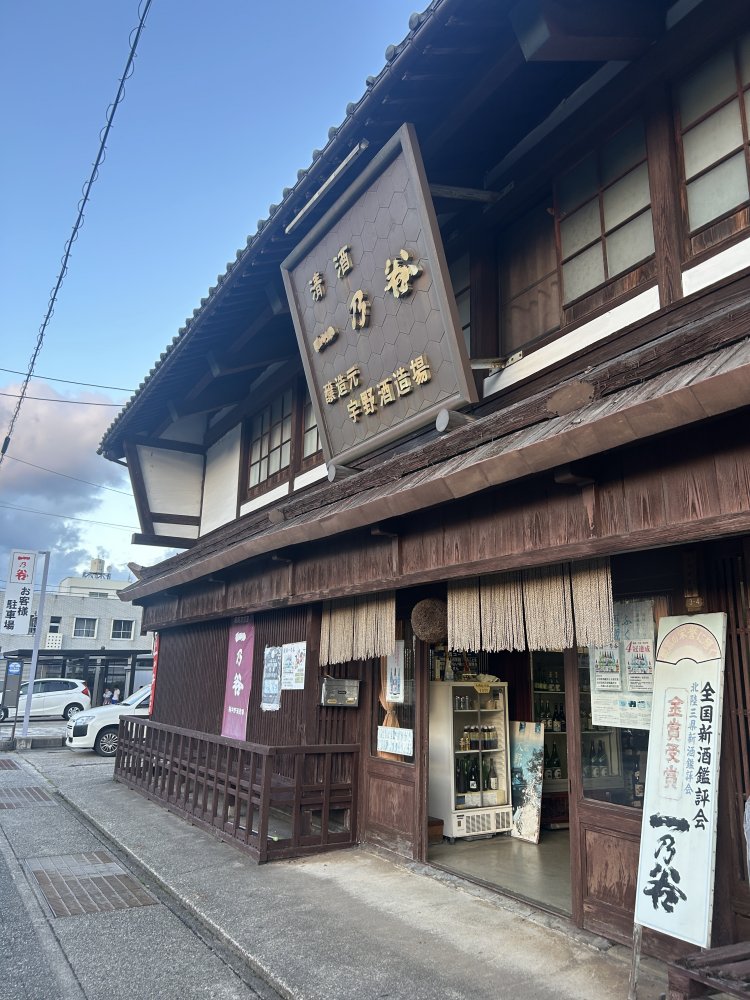
We came upon a sake brewery on the right. It is remarkable that Ono still boasts four active breweries, while so many breweries have closed over the years.
As sunset approached, we turned right (east) before reaching the northern end of the street. This was Ishidoro Street. Ishidoro refers to the stone lanterns often found at shrines, temples, and gardens, and as shown in the photo below, they are installed along the right (south) side of this street. Today, the street is a wide 14.4 meters, but originally it was only 3.6 meters wide. After the great fire of 1899, part of the street was widened as a firebreak. Indeed, as we continued along, the road suddenly narrowed again, returning to its original width.
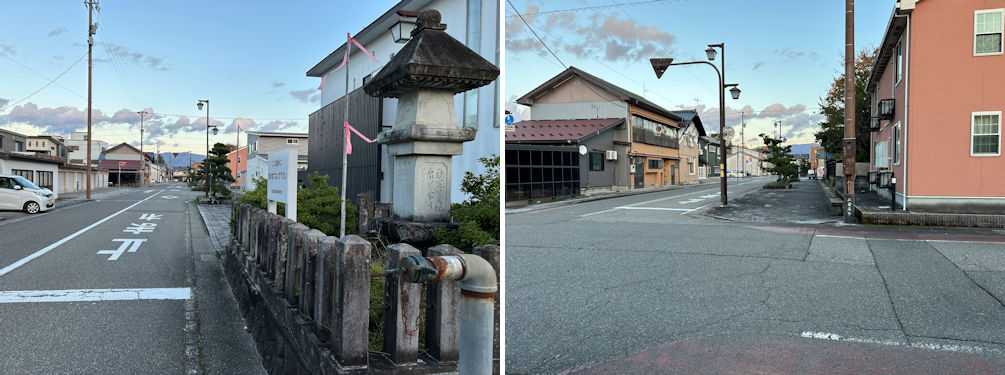
Ishidoro Street looking east. Notice the stone lanterns (ishidoro) on the right, which is why the name Ishidoro Street derived (left). As we continued along, the road suddenly narrowed again, returning to its original narrow width (right).
Following the narrowed Ishidoro Street to its end, we reached Teramachi Street. Teramachi districts are found throughout Japan, and in many cases they were positioned at the edges of castle towns for defensive purposes. In Ono as well, this temple district lies on the side farthest from the castle. Walking along Teramachi Street, temples of virtually every Buddhist sect are tightly arranged mainly on the eastern side of the street.
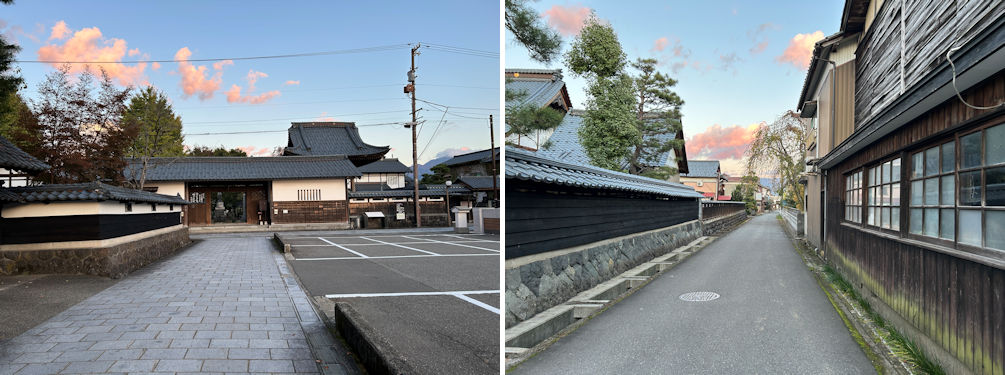
At the end of Ishidoro Street, you reach Teramachi Street, where temples begin to cluster (left). Streetscape of Teramachi Street. Most of the temples line the left (east) side (right).
As it was getting quite late, I decided to head back toward the castle, turning right (west) after walking a short distance south along Teramachi Street. This road is called Shichiken Street, where a morning market is held every day. There was another sake brewery along this street. It is a pleasantly atmospheric street. The historic town area is only about one square kilometer, so it's easy to explore. I felt it truly lives up to its reputation as the “Little Kyoto of Echizen.
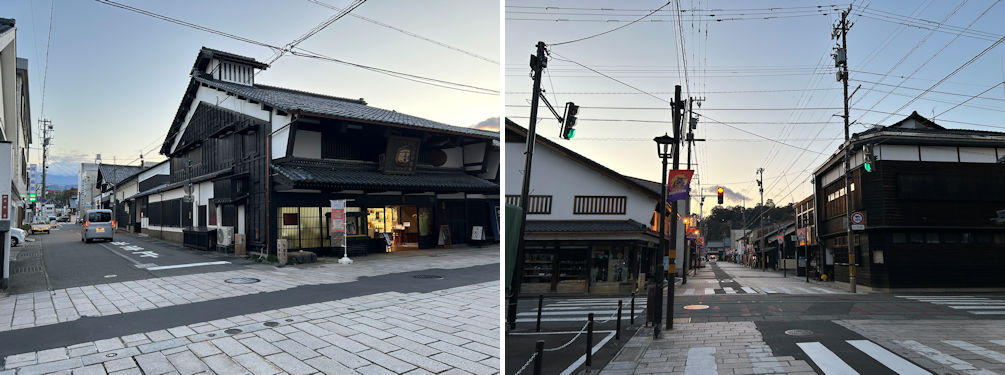
There was another sake brewery along Shichiken Street (left) It is a pleasantly atmospheric street. You can barely make out the castle in the back as you walk west along the street (right).
Finally, I would like to introduce the sake I purchased on this visit. It came from a brewery founded in 1620, and included a one-cup (180 ml) futuu-shu (standard sake)—which has become rather uncommon these days and contains no added brewing sugar, much like the former ikkyu-shu (first class sake, so graded depending on the amount of brewing tax paid) as well as a 720 ml honjozo sake. True to the character of a mountain-region sake, it is on the heavier side and seems better suited to meat or mountain vegetables than to fish.
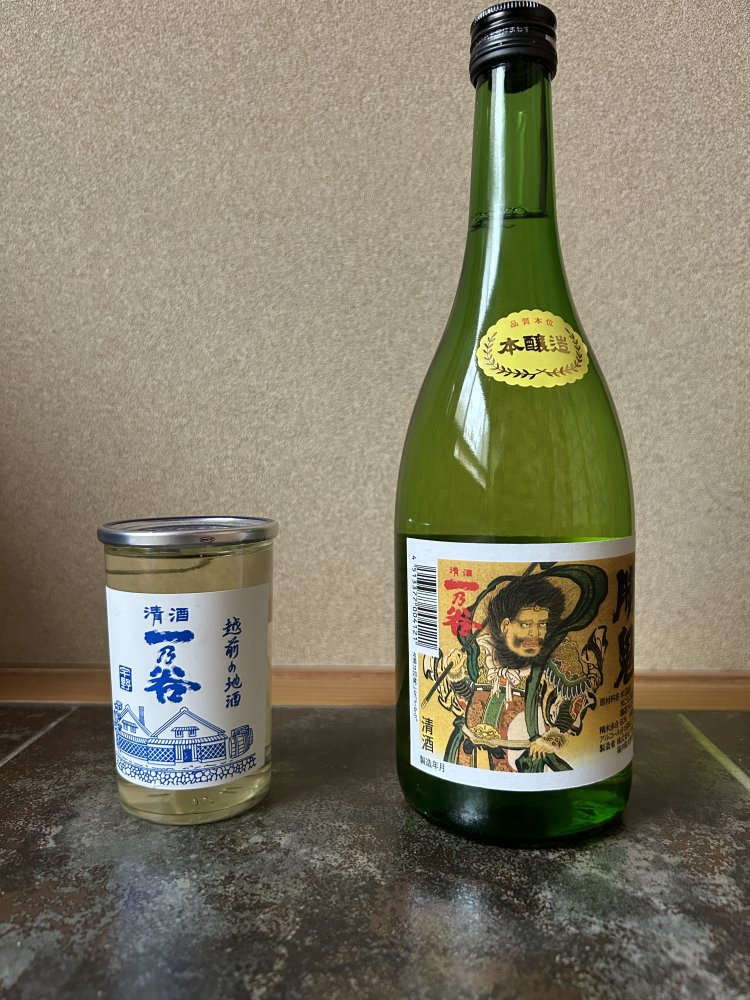
A one-cup standard sake and a 720ml honjozo sake of Ichinotani