
Rediscovering Japan
Rediscovering Japan
Travel (JAXA Tsukuba Space Center(Tsukuba)/Sekiyado Castle Museum (Noda)/Metropolitan Outer Area Underground Discharge Channel (Kasukabe) Part 1 (JAXA Tsukuba Space Center)
by tomizuta
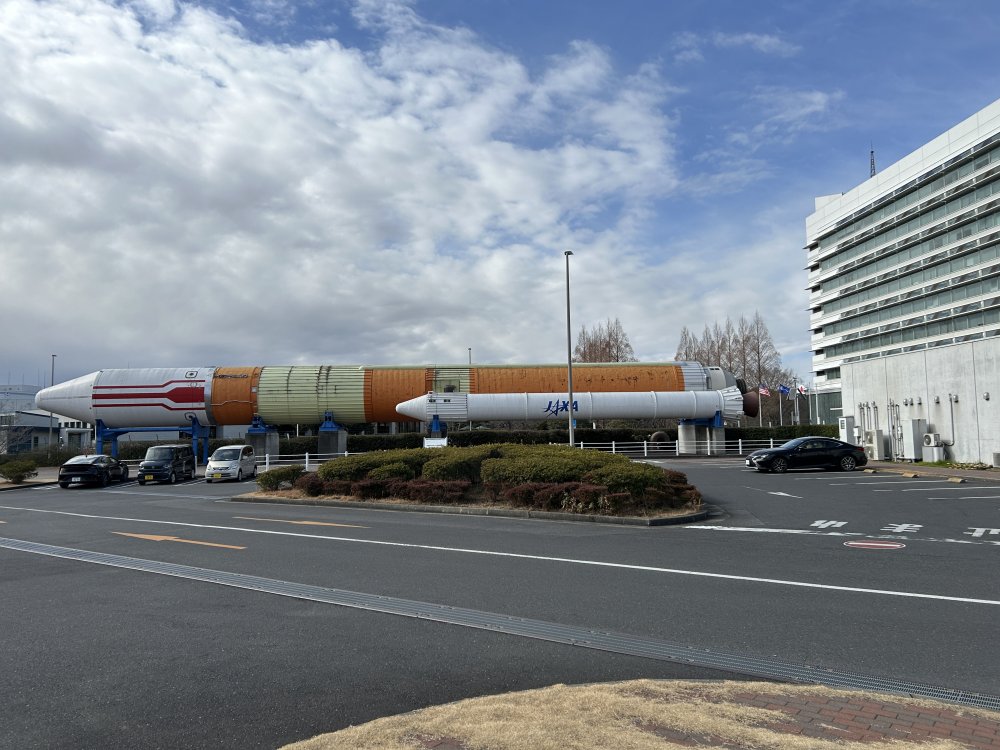
A full-scale, 50-meter H-II rocket, Japan’s first large satellite launch vehicle developed entirely with domestic technology (operational from 1994 to 1999), displayed near the entrance of the JAXA facility.
As a guide for overseas visitors, my aim is always to help guests make the most of each day of their stay in Japan. One recurring challenge arises when a destination requires half a day or more simply for the round trip, yet there are no other easily combinable attractions nearby to create a well-balanced itinerary. A good example is the Metropolitan Outer Area Underground Discharge Channel in Kasukabe, Saitama Prefecture—often referred to as the “Underground Temple.” While researching possible ways to address this issue, I discovered a day-trip bus tour that combines a visit to the discharge channel with the JAXA Tsukuba Space Center in Ibaraki Prefecture. In late January 2026, we finally managed to secure reservations that allowed us to visit the Tsukuba Space Center on the afternoon of the first day, stay overnight at a hotel in Tsukuba, and tour the Metropolitan Outer Area Underground Discharge Channel on the afternoon of the following day.
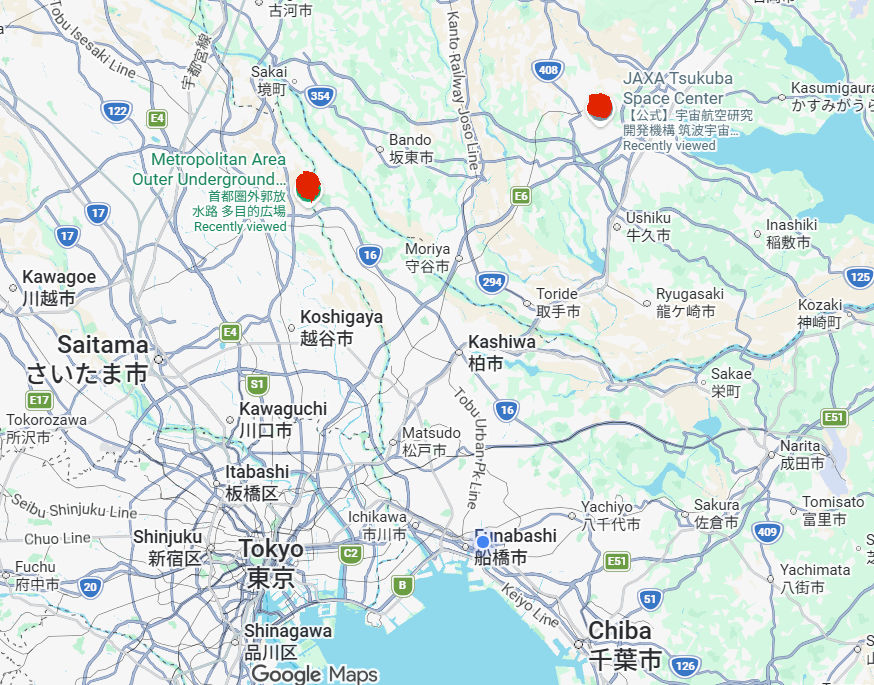
The relative locations of Tokyo, the JAXA Tsukuba Space Center, and the Metropolitan Outer Area Underground Discharge Channel are shown on the Google Map above. The JAXA Tsukuba Space Center lies about 70 kilometers northeast of central Tokyo, while the Metropolitan Outer Area Underground Discharge Channel is located approximately 60 kilometers almost directly north of Tokyo. The distance between the JAXA Tsukuba Space Center and the discharge channel is just under 40 kilometers. Sekiyado, introduced later, is located slightly closer to the discharge channel than the midpoint between the two.
JAXA (Japan Aerospace Exploration Agency), often described as Japan’s counterpart to NASA, was established in 2003 through the integration of several previously separate organizations involved in aeronautics and space research. The Tsukuba Space Center was opened in June 1972, when one of those predecessor organizations—the National Space Development Agency of Japan (NASDA)—began preparations for the launch of the N-I rocket. Today, the center serves as JAXA’s core hub for space-related activities, including satellite development, human spaceflight, and the utilization of the space environment, and it is home to more than half of JAXA’s personnel. Located in Tsukuba Science City, the complex lies about 70 kilometers northeast of central Tokyo. Guided tours are offered by advance reservation, with individual tours held daily at 11:30 a.m. and 3:00 p.m. Only the 11:30 a.m. tour on Thursdays is conducted in English. The tour lasts about one hour, beginning at the reception facility and continuing by bus to the Astronaut Training Building and the “Kibo” Japanese Experiment Module. The participation fee is ¥500 per person. We had reserved the 3:00 p.m. tour, but arrived earlier than expected. As we parked the car, we noticed that two large tour buses were already in the parking lot.
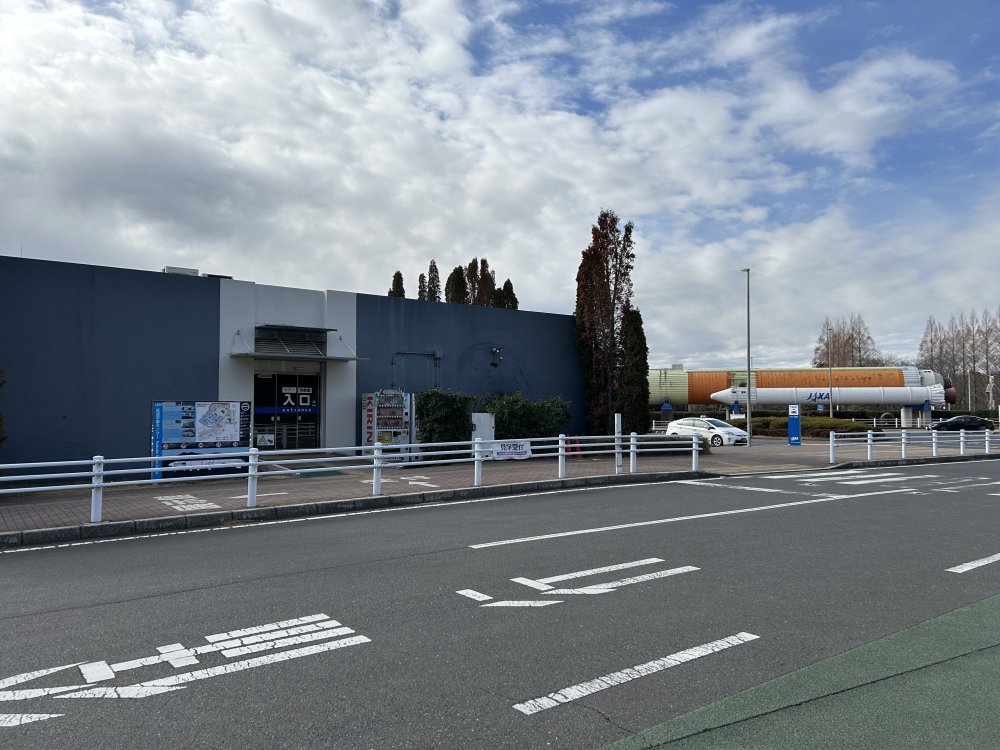
The visitor reception and meeting point are located inside this Public Relations and Information Building. After check-in, the tour begins with a video presentation in an audiovisual room within the same building.
At the reception desk, we asked whether it might be possible to switch from our 3:00 p.m. reservation to the 11:30 a.m. tour. Fortunately, there were a few openings, and we were able to change our booking. After paying the fee, we were instructed to wear a paper wristband, which is used to manage group size through a combination of color and number. The visit began with a short introductory video of about ten minutes in an audiovisual room. The presentation was in Japanese but included English subtitles, making it easy to follow. After that, participants were divided into two groups, and the tour of the facilities began.
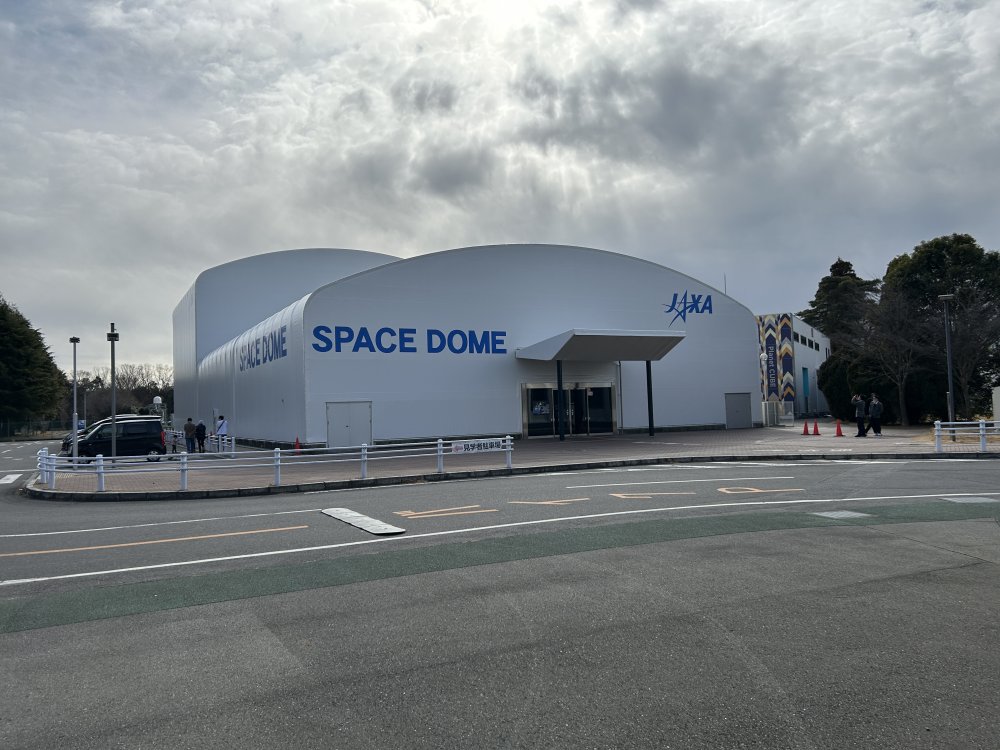
The Space Dome shown in the photo above which I'll introduced later, and the gift shop behind the Space Dome, can be visited without a reservation.
Travel between sites was by bus, but since all facilities are located within the same complex, each ride took only a few minutes. The first stop was the Astronaut Training Building, where we were able to observe various training facilities. In addition to the challenges of operating in zero gravity, the staff explained the mental demands of long-term confinement in space as well as the physical effects on the human body, including impacts on bones and muscles during extended missions.
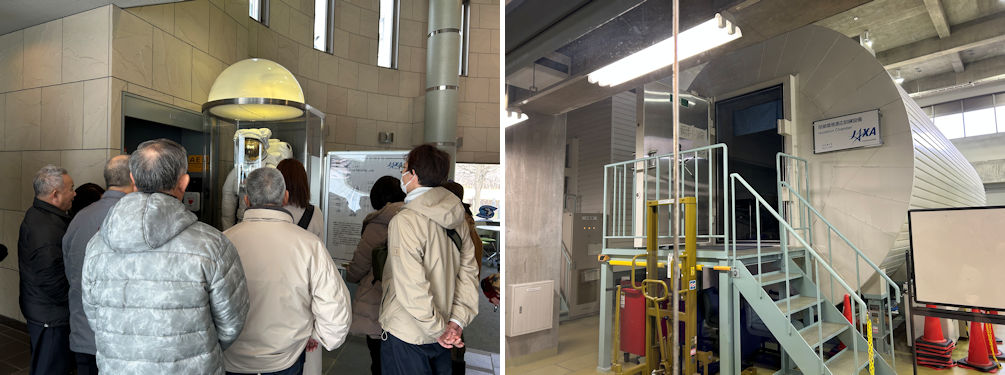
(Left) Receiving an explanation of a spacesuit used for extravehicular activities at the Astronaut Training Building. Although designed for use in zero gravity, it weighs over 100 kilograms. (Right) The Closed Environment Adaptation Training Facility. The ability to adapt to long-term confinement is said to be a key requirement in astronaut selection.
After boarding the bus once again, we made our final stop at the “Kibo” Japanese Experiment Module. Developed by JAXA, Kibo is Japan’s contribution to the International Space Station (ISS) and also its largest experimental module. Its components were transported to the United States for launch, and it took more than 20 years of development before the module was fully completed in July 2009. At the Tsukuba Space Center, visitors are able to view Kibo’s mission control room. While rocket launches themselves are widely covered by the media, it was striking to learn from the staff that the real work begins after launch, with 24-hour monitoring and control carried out continuously from this control room.
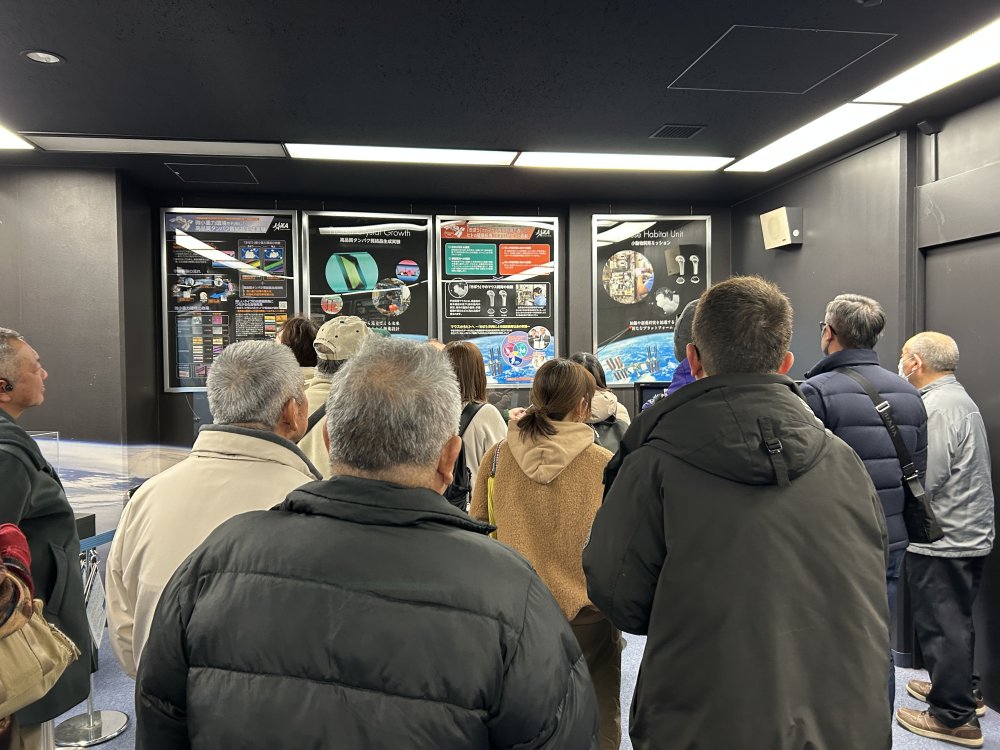
At the “Kibo” Japanese Experiment Module, the visit includes not only a tour of the mission control room but also explanations of experiments conducted aboard the ISS, such as studies using mice to examine the effects of long-term stays in space.
After the guided tour concluded, visitors who wished to do so were able to register at a reception desk for lunch at the on-site cafeteria. We chose to skip this and instead visited the shop and the Space Dome exhibition hall, both of which are free to enter. At the Space Dome, we joined a staff-led explanation, which provided a clear overview of Japan’s history of satellite and rocket development, along with full-scale mock-ups related to the Kibo module.
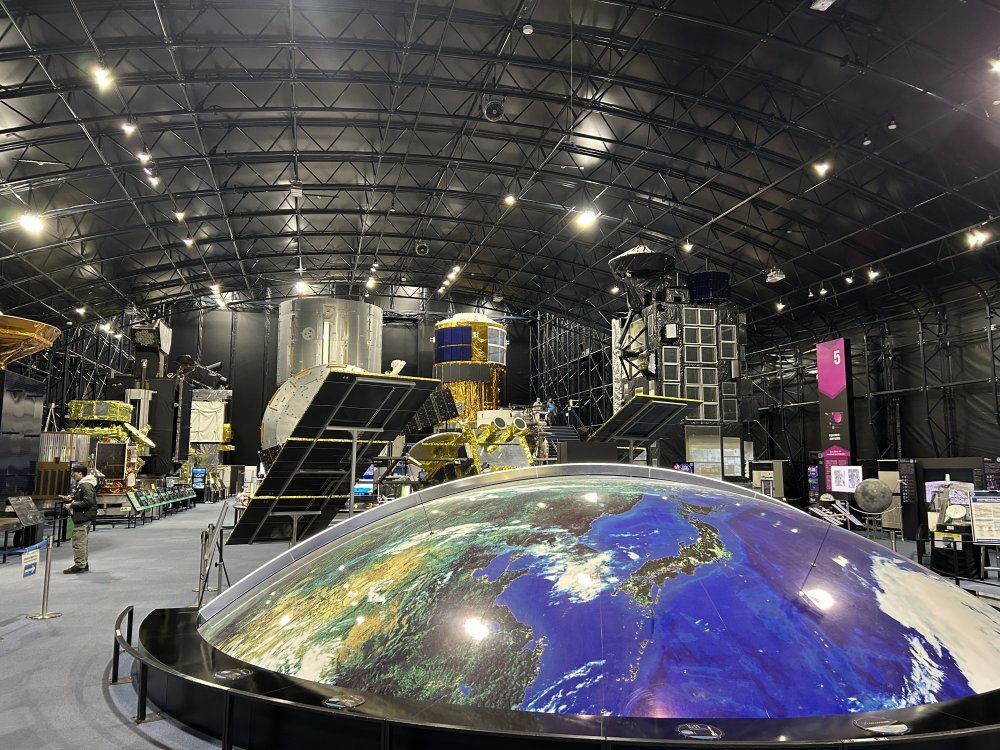
The Space Dome features an extensive range of exhibits tracing the history of JAXA’s space development, including communication and observation satellites launched in the past. Free guided tours led by staff are offered every hour except at noon. While the tours themselves are conducted in Japanese, each exhibition area is equipped with an English audio guide. We noticed some overseas visitors, who were likely making use of this service.
Spending about two hours here offers a meaningful overview of Japan’s space program. We also noticed a number of overseas visitors participating in the tour and browsing the shop. That said, many of the exhibits are labeled only in Japanese, and an expansion of English-language explanations would be a welcome improvement.
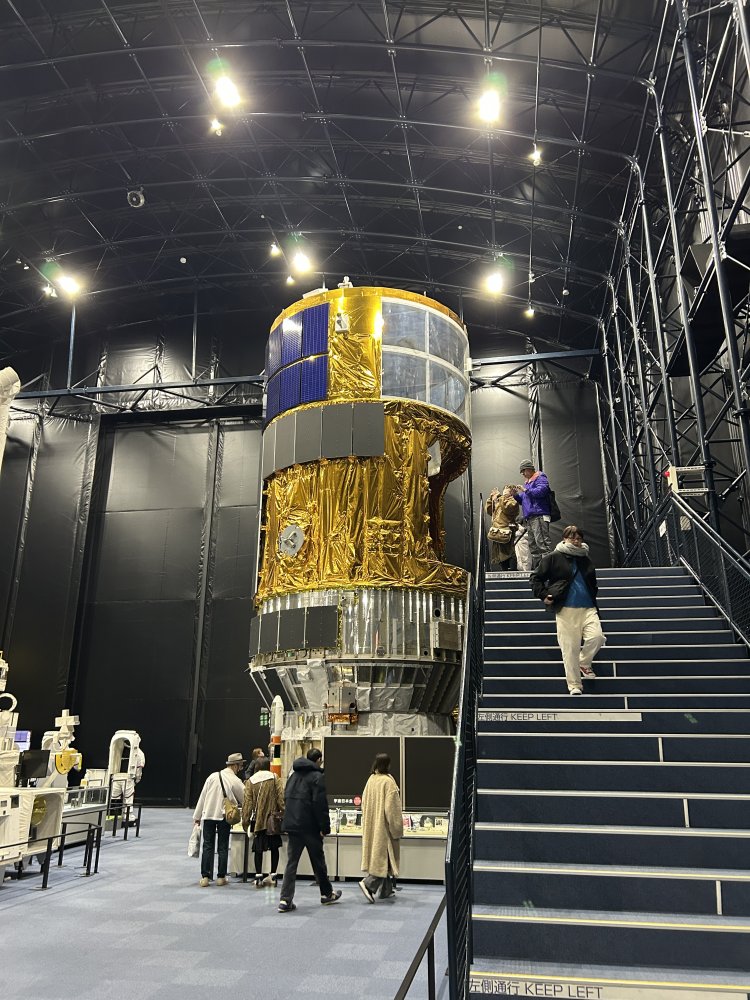
A full-scale model of “Kounotori,” Japan’s unmanned cargo spacecraft developed to transport supplies to the International Space Station (ISS).
continue to Part 2 (Sekiyado Castle Museum)
back to top page